
The exploring majority of 2025 is the active majority of 2026.
Active AI use among commercial landlords went from 32% to 57% globally in twelve months. In the United States it stands at 64%. The wait-and-see group did not grow. It halved.
Your peers are no longer evaluating. They are operating. The learning curve is not steep, but the compounding is real: the teams building these habits now will be running at a measurably different cost per lease within two years, and there is no market where budgets are heading the other way.
Landlords increasing AI and technology budget versus cutting it. Only 2% globally plan a decrease. In the US, 60% are increasing.
private investors and family offices, not institutions with AI teams.

It starts in the lease document. Every market, no exceptions.
Lease administration and abstraction came straight in at the top: 60% globally, 66% in the United States, more than twenty points clear of any other use case.
It is easy to see why. This is the highest-volume, highest-friction document task in commercial property: turning leases that run to hundreds of pages, in no common format, into structured, queryable data the rest of the business can act on.
Lease data is the source of every number you report and every obligation you can be held to. Keyed by hand, it is only ever as current as the last person who had time.
This is also where AI has made its most dramatic leap: from extracting the routine fields to capturing the nuanced clauses that were always the hardest, and the most valuable, part. And the barrier to adopting it is not money. It is in-house technical expertise, named by 24% of landlords. Cost came fifth.
of US landlords name lease administration and abstraction as their AI target, the top answer in all four markets
cite lack of in-house expertise as the biggest barrier. Cost ranked fifth, at 11%
With over 70 years of experience in the Pittsburgh market, Berger Investment Group is a family-owned and operated real estate company managing a diverse portfolio of commercial properties, including flex, industrial, retail, and office spaces.
“AI has taken our workflows to the next level. It eliminates the need to manually pull files, generates emails, and auto-populates tasks like insurance and compliance tracking. It’s fast, intuitive, and has become a real game-changer.”


An email arrives. The triage is already done.
Tenant communication is the second most common AI use case globally, cited by 39% of active users, with US landlords leading at 52%, double the UK's 26%. The scenario plays out dozens of times a day in every portfolio: an email arrives from a tenant reporting a maintenance issue.
Before AI, a property manager reads the email, finds the property, pulls up the tenancy, decides what to do, and writes a reply. Each step is small, but across a whole portfolio, it adds up.
With AI, the system reads the email, works out what it's about, links it to the right tenant, property, and lease, and suggests a next step. The property manager just reviews and approves.
Most portfolio risk enters through the inbox: the maintenance request nobody logged, the certificate that lapsed, the review date that passed. Triage is where property managers lose their day, and it is the part of the day that scales worst as the portfolio grows.
It is also where tenant satisfaction is won or lost. Tenants do not experience your lease abstraction. They experience how quickly someone answered and whether the thing they reported actually got fixed. Response time is the most visible service metric a landlord has, and it is the one AI moves first.
properties and 400 tenancies under management
to triage one maintenance request email into a task, created work order, supplier email sent, reply to tenant
for the same task workflow, with live data
Check 5% of your data once a year, or 100% of it every day.
Auditing lease data by hand has always meant sampling. Even large portfolios check a fraction of records once a year and accept that as good enough, because reading every lease, contract and insurance document against every field was never realistic.
AI checks all of it, continuously, against the source document. Discrepancies surface as they appear, not at audit time.
This is the category of work that unlocks value your team simply couldn't get to on its own - not because they're not capable, but because full-portfolio accuracy at this scale was never humanly possible. Checking every lease against every field, every day, at a scale no team could sustain manually. A recovery you never billed or an insurance certificate that quietly lapsed doesn't show up as a slow process. It shows up as lost income or an uninsured claim, discovered too late.
That full-portfolio accuracy is the foundation everything else sits on. Without it, AI is just guessing faster. With it, you get real visibility into what's happening across every lease, confidence that what AI surfaces reflects what's actually in the document, and a system that can act on trigger events on its own - not just flag them for someone to go check.
Move from doing to directing.
Commercial real estate has always described itself as a human business. Yet operationally, its people have been spending the majority of their time on the administrative infrastructure of doing that work: parsing documents, drafting communications, entering data, running audits.
For investors, the read-across from this is direct. Property managers freed from administrative work spend more time with tenants. More time with tenants drives retention. Retention drives occupancy. Occupancy drives yield.
The AI story is ultimately a portfolio performance story, and it starts with what a property manager does with a Tuesday afternoon when the lease review has already been done for them.
Do more with the team you have
The same team handles more, with better accuracy, and natural attrition is absorbed by the platform. Operating margins improve from day one, whether that shows up as higher profitability or redeployed capacity.
Point that capacity at growth
More leases per manager, a bigger portfolio, and the business development that was always on the list and never got done.
Neither is about replacing people. The choice isn't AI or judgement, it's AI freeing up the judgement that was always there, just buried under data entry. Whichever path a business takes, the person making the call is still a person.
The work that runs 24/7
Agentic AI is the next step: it works the portfolio on its own schedule and hands you the decisions.
AI will proactively chase arrears, follow up supplier compliance, draft email responses using live data, and flag discrepancies in tenancy setups, all with you staying in control of what gets sent or actioned.
have achieved all of their AI program goals. 90% have started piloting.
Everything that follows is about closing that distance.
61% see measurable productivity results.
Active users say the same thing: AI brings less admin, less manual work. That is not a soft benefit. It is already changing how portfolios get resourced.
But “it saves time” isn't what gets signed off anymore. The era of AI spend as an acceptable experiment is ending. Businesses have funded the trial phase, now they want proof.
The ROI story is still being written and we won't pretend otherwise. But the pattern that is holding up is a simple one: start with the admin. The time savings show up first. The tenant and financial gains follow, they don't lead.
The returns show up beyond the clock.
They show up in hiring decisions, portfolio growth, compliance records and tenant relationships. Each one is a different kind of return.

In commercial property, general-purpose AI runs out of road quickly.
There are two main kinds of AI in this market. Horizontal AI, the general-purpose models, and Vertical AI trained on the industry itself, and in commercial property, that difference shows up fast. A general model has no way of knowing a break clause isn’t a rent review, or that a tenant can’t be double-charged. That knowledge either lives in the platform, or it doesn’t exist.
This is why the vendor decision matters so much. 60% of real estate companies remain unprepared to scale AI, and the gap between starting and making it work is the defining story of this stage. The barrier landlords name most isn’t money, it’s in-house technical expertise. Cost came fifth.
What a vertical platform has to get right:
A general model can process a lease. It can’t tell you a break clause isn’t a rent review. That has to be built in, not layered on top.
Every answer is cited back to the source record and the exact clause, so you verify before you act, not after.
A platform embedded in your operations learns how you actually work, and gets sharper with every lease it touches. That’s what lets one use case fund the capability to expand into the next.
What is the accuracy at scale, not in a demo?
Is the intelligence proprietary, or a wrapper around someone else’s model?
What is the track record in commercial property specifically?
How is spend controlled as usage grows?
The engine behind the examples.
Re-Leased AI is built directly into the platform. No separate integration, no technical team, no implementation project, which is precisely the barrier landlords name most. It works on your live leases, tenants, financials and compliance history.
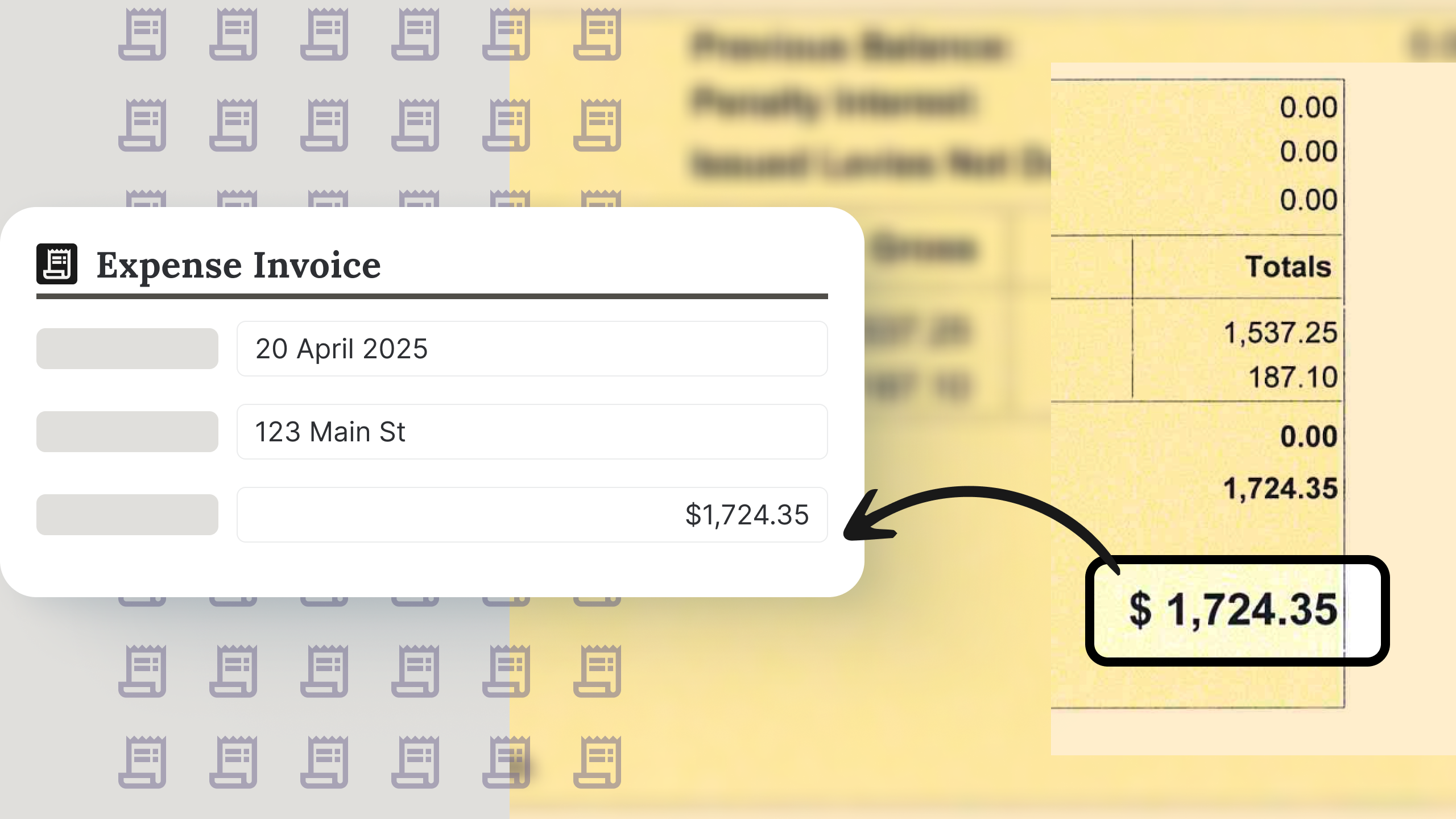
Eliminate manual data entry
Leases, insurance policies, invoices, compliance documents and floor plans, read, extracted and logged in the right place.
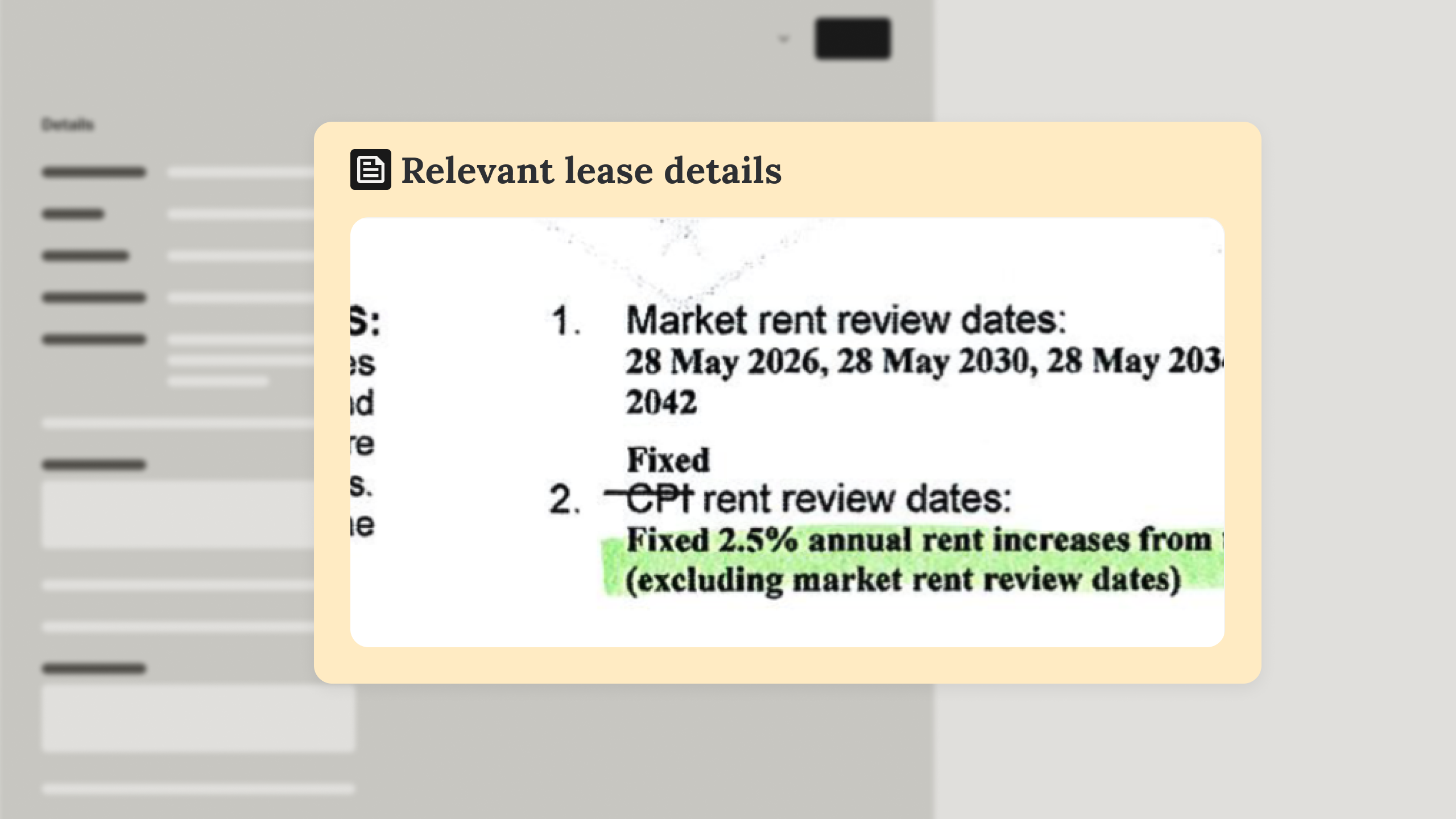
Ask across the whole portfolio
“Which tenancies have rent reviews in the next 3 months?” Plain English, no reports to run, every answer cited to the source record.
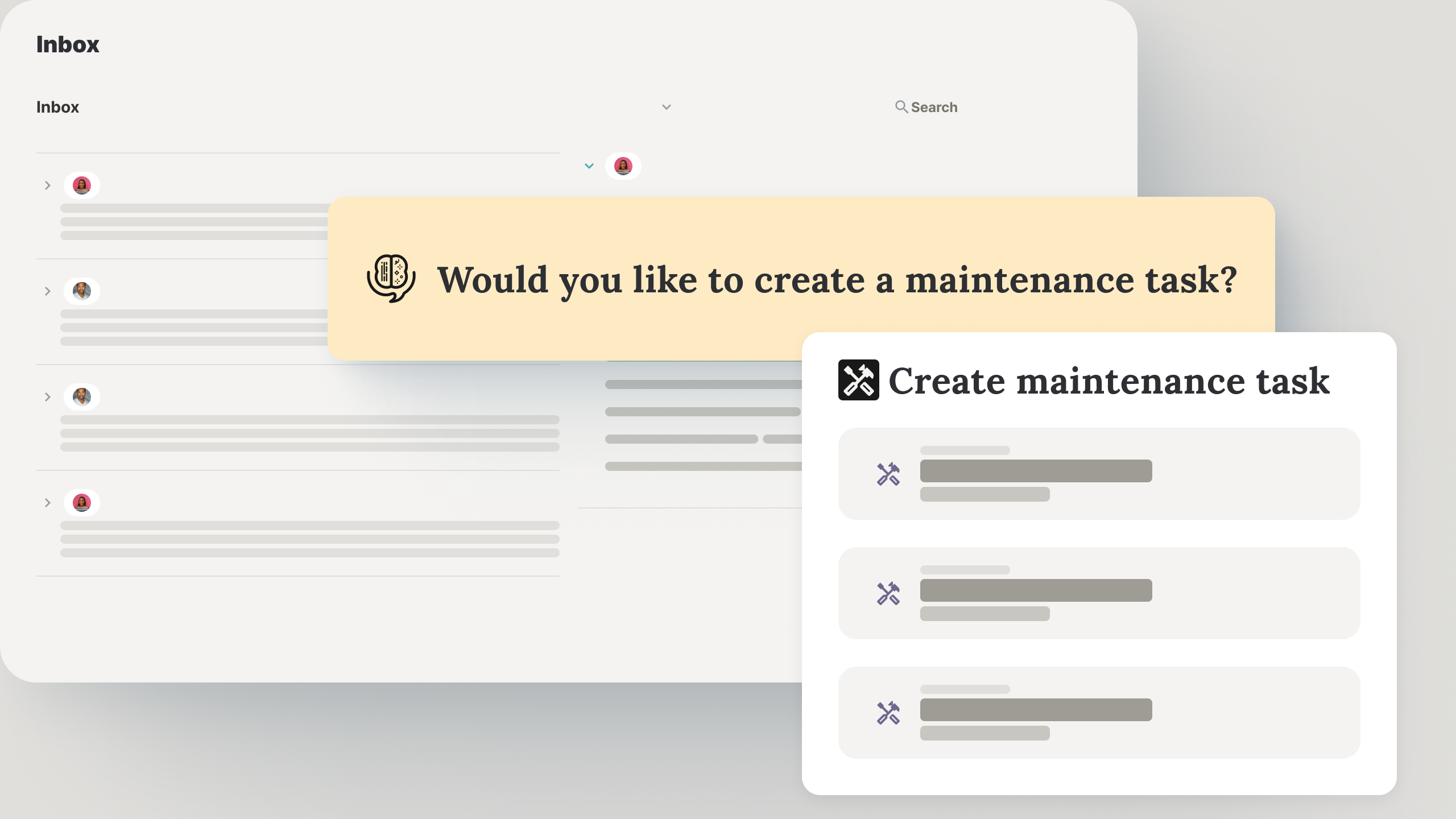
Everyday tasks, in seconds
Logs maintenance, creates contacts, reminders and email drafts inside the workflow. Re-Leased AI suggests, you decide.
leases supported across the Re-Leased platform
thousands of property firms, across four markets
the Re-Leased AI average one property manager can carry
Two reports behind this page.
One measures the market. One documents what is actually happening inside it.
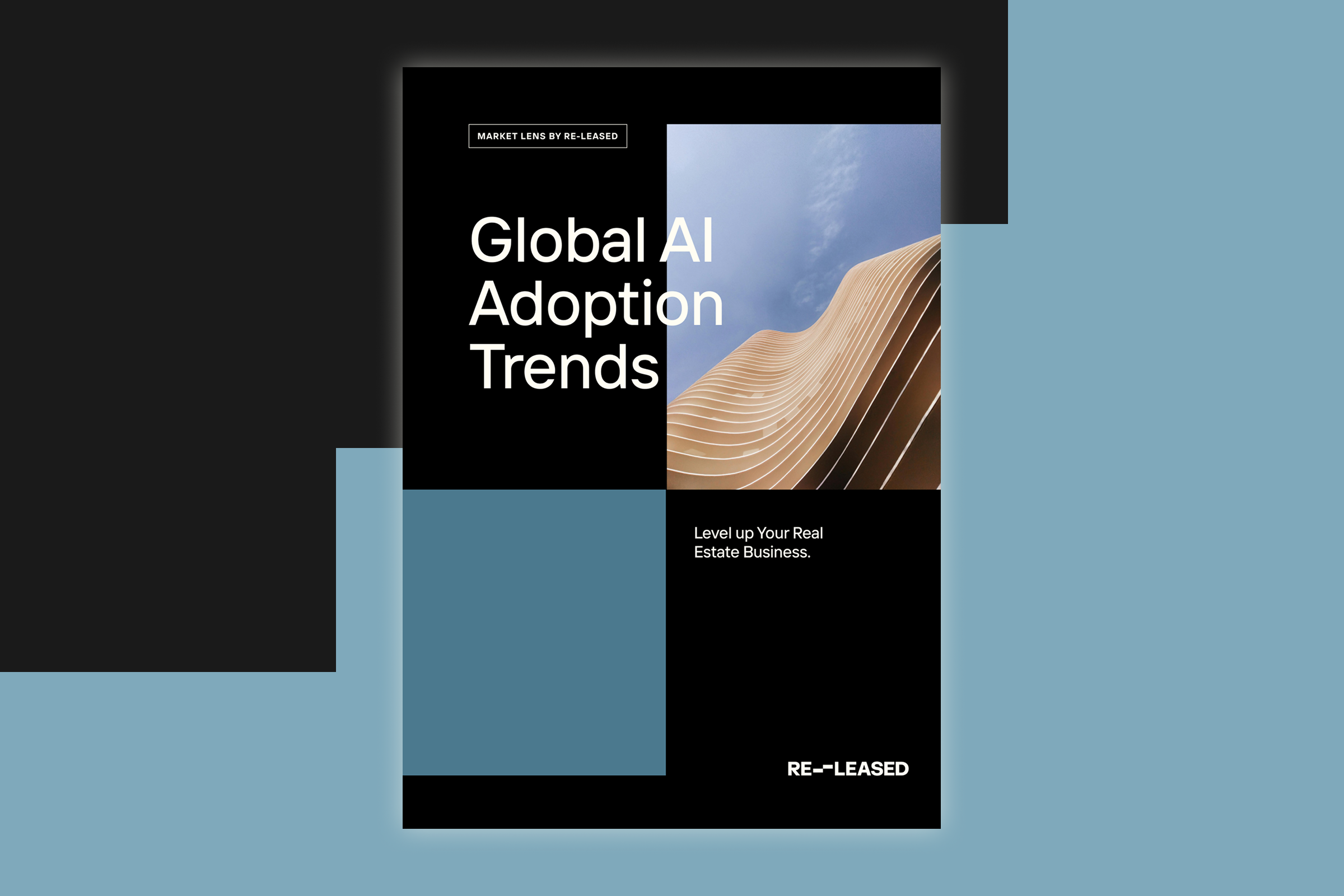
AI Adoption Report
Global AI Adoption Trends. In-depth responses from more than 175 senior commercial landlords across the US, UK, New Zealand and Australia, fielded March to April 2026, with year-on-year comparison against the 2025 baseline.

State of AI in CRE Whitepaper
The state of AI in commercial property management, with insights from JLL’s CTO and GGP’s VP of IT.
Capital is flowing in. Proof is lagging behind. A candid look at what’s actually working, and what isn’t, from leaders who’ve seen AI change real work in real businesses. Built for investors, portfolio owners, and property managers moving from pilot to something embedded and reliable.